
Journal
The Cocoon Box: Five Months Toward a More Visible LIGNORAE
06 September 2026
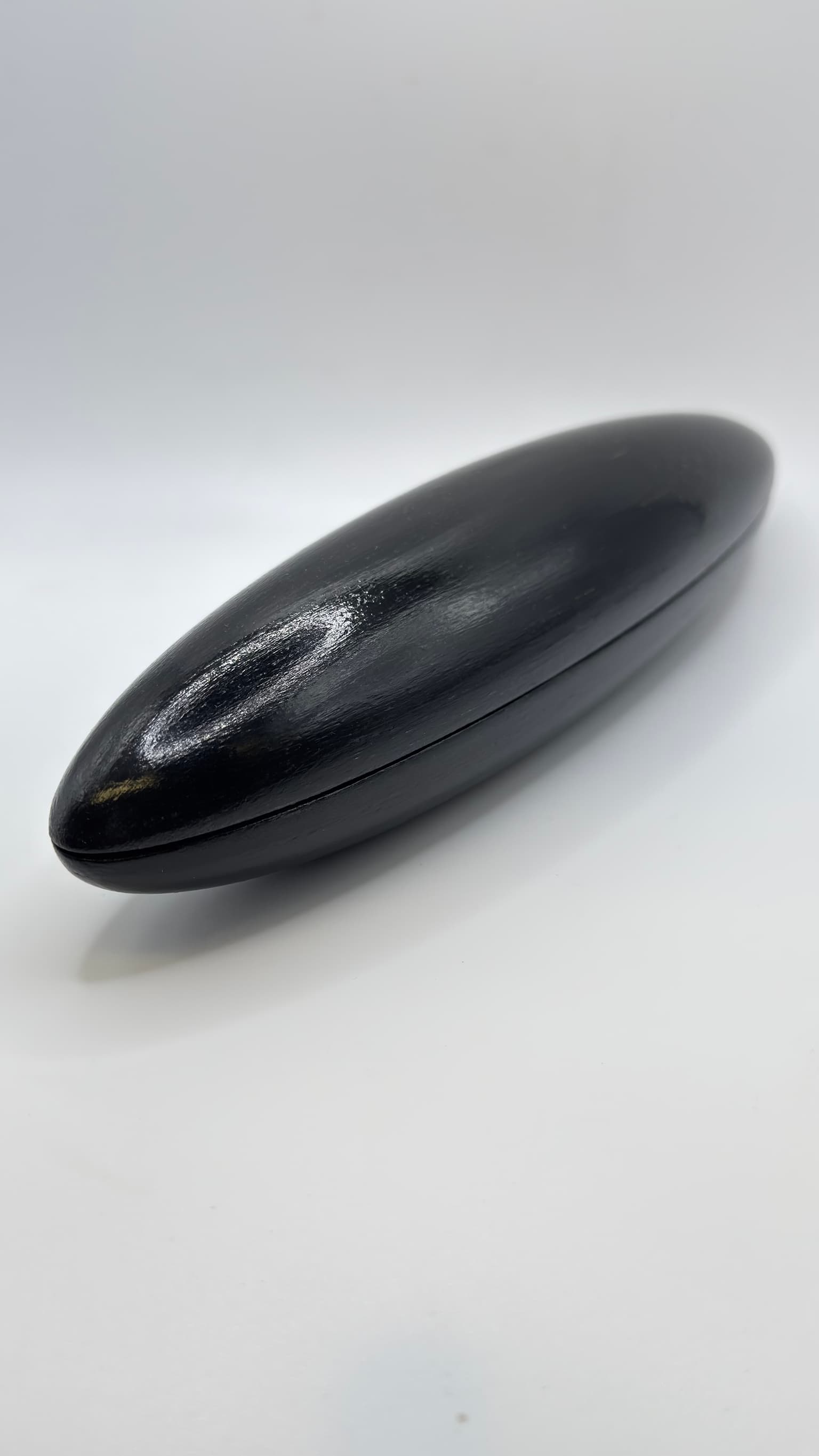
After five months of trials, adjustments and quiet insistence, the LIGNORAE cocoon box becomes a milestone in the atelier’s visual language: a sculptural vessel shaped around protection, touch and ritual.
Atelier note
A record of the object at the moment it becomes part of the LIGNORAE language.
There are moments in the life of an atelier when an object stops being only a solution and begins to become a sign.
The cocoon box is one of those moments for LIGNORAE.
After five months of work, trial, error, sanding, closing, opening, correcting and beginning again, the form has arrived at a point where it no longer feels like packaging. It feels like part of the object. A vessel. A small sculptural chamber. A quiet extension of the writing instrument it protects.
From the beginning, LIGNORAE was never meant to exist only through the fountain pen itself. The writing object needed a world around it: a certificate, a numbered archive entry, a gesture of presentation, a material atmosphere. The cocoon box brings these elements closer together. It makes the encounter slower. Before the pen is held, something must be opened. Before the nib touches paper, the hand meets another form.
This matters.
In a world where most objects are wrapped, boxed and dispatched as quickly as possible, the cocoon box asks for a different tempo. It does not reveal everything at once. It protects without becoming rigid. It hides without becoming secretive. Its closed form has weight, silence and a certain ambiguity. It could be a case, a seed, a shell, a small ritual object. Only when opened does its function become clear.
The black version, with its visible grain and deep surface, has become especially important for us. It carries the tension we have been searching for: between refinement and trace, polish and hand, darkness and warmth. The surface is not anonymous. It still shows the material underneath. It does not try to erase the work that made it.
Inside, the red fountain pen changes the object completely. The contrast is immediate: black exterior, warm red heart, metal ring, protected body. It is not simply storage. It is a reveal.
This is where the identity of LIGNORAE becomes more visible.
The atelier has always been drawn to forms that feel reduced, but not empty. Quiet, but not neutral. Sculptural, but still useful. The cocoon box follows that direction. Its elongated piscis-like form carries a distant Brancusian influence, not as quotation, not as decoration, but as a way of thinking about essence. A shape reduced until it becomes almost inevitable. A form that seems simple only after a long process of removing what does not belong.
That influence is not meant to be obvious. It should not announce itself. It lives in the discipline of the silhouette, in the continuous curve, in the way the object avoids corners and ornament, choosing instead a complete volume that asks to be touched.
For LIGNORAE, this is an important step.
A fountain pen can be beautiful on its own. But a LIGNORAE object should also carry a sense of arrival. It should feel registered, held, protected and remembered. The cocoon box gives that experience a physical form. It creates a bridge between the atelier and the future owner: the moment of opening becomes part of the object’s memory.
The work is not finished. It never really is. The surface will continue to be refined. The closing gesture will become more precise. The relationship between box, certificate and writing instrument will continue to evolve. But something essential has now appeared.
After five months, the cocoon is no longer only an idea.
It is NOT any LIGNORAE form. It is THE LIGNORAE form.
Process images
Additional views from the atelier.
The gallery follows the object closely: surface, proportion, opening, and the small changes of light that make the form legible.